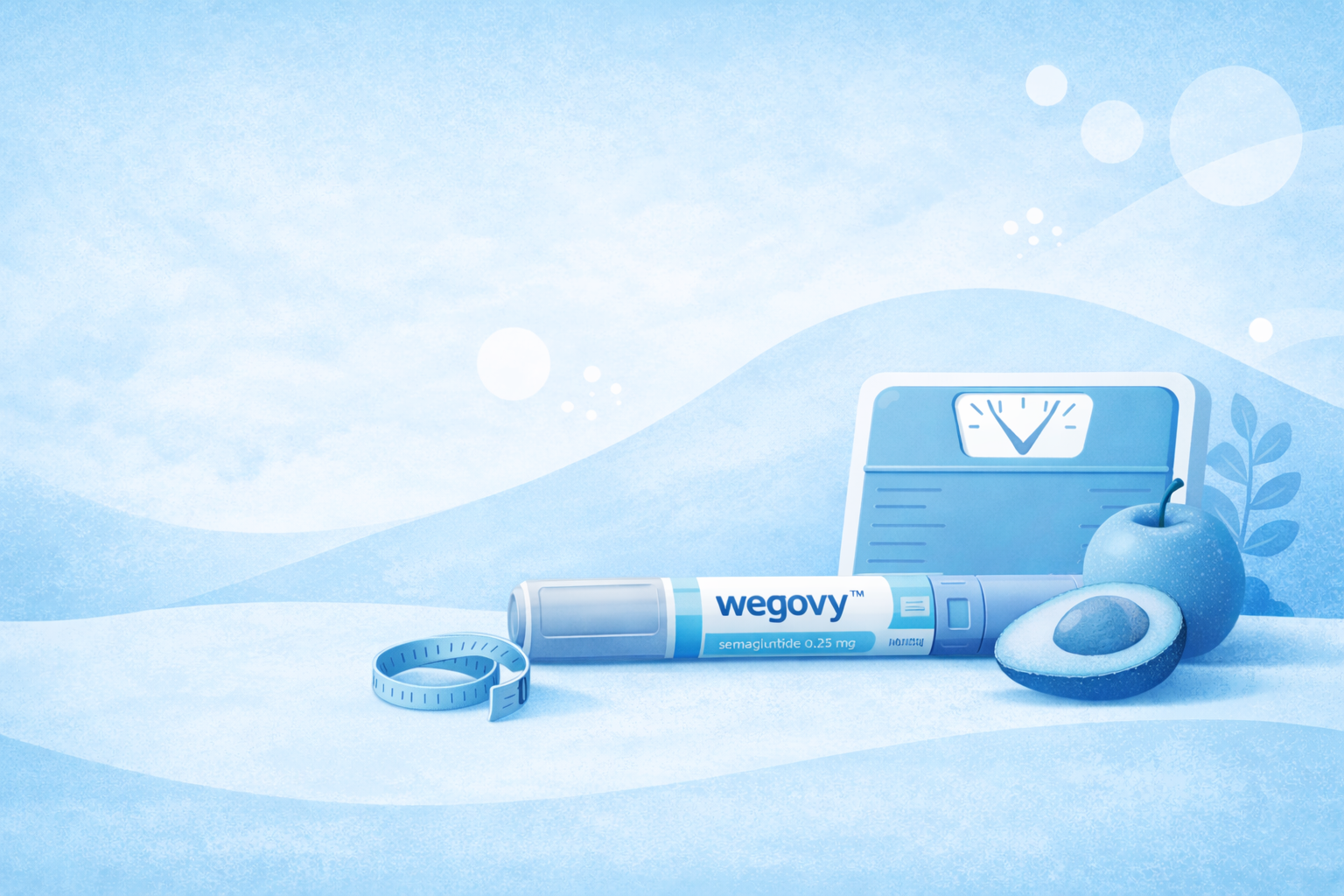
Wegovy (semaglutide) is a prescription-only GLP-1 weight-loss injection that has been clinically proven to support significant and sustained weight loss when combined with dietary and lifestyle changes. It works by mimicking the hormone GLP-1 (glucagon-like peptide-1), which plays a key role in appetite regulation, digestion, and blood-sugar control.
This guide explains how weight loss with Wegovy typically progresses over time, what results patients may expect at different stages, and which factors influence individual outcomes.
How Does Wegovy Support Weight Loss?
Wegovy works by activating GLP-1 receptors in the brain and digestive system. These effects help to:
-
Reduce appetite and food cravings
-
Increase feelings of fullness after meals
-
Slow gastric emptying
-
Improve blood-sugar control
Together, these mechanisms reduce overall calorie intake and support gradual, sustainable weight loss when used alongside a calorie-controlled diet and increased physical activity [1][2].
How Wegovy Compares to Other Weight-Loss Injections
Wegovy (semaglutide) is a GLP-1 receptor agonist that supports weight loss by reducing appetite and slowing digestion. Other prescription weight-loss injections may act on additional hormone pathways and can lead to different average outcomes for some patients.
Clinical trials suggest that Mounjaro (tirzepatide), which activates both GLP-1 and GIP receptors, may lead to greater average weight loss than Wegovy for some patients, although individual results vary and suitability depends on medical history and tolerance.
How Long Does Wegovy Take to Work?
Most patients begin to notice the effects of Wegovy within the first 1 to 4 weeks of treatment, although these early changes are usually related to appetite rather than significant weight loss.
During this initial phase, Wegovy works by reducing hunger, increasing fullness, and helping control portion sizes. Many patients report eating less and feeling satisfied more quickly, even before seeing measurable changes on the scale.
More noticeable weight loss typically begins after 4 to 8 weeks, as the dose is gradually increased and appetite suppression becomes more consistent. By this stage, patients often find it easier to maintain a calorie deficit, which is key to achieving sustained results. If you want to estimate how this may translate into expected progress, you can use our Wegovy weight loss calculator to model potential outcomes based on your calorie intake and target weight.
By around 8 to 12 weeks, weight loss is usually steady and ongoing, particularly when combined with a structured diet and regular physical activity.
Wegovy is designed to produce gradual, clinically meaningful weight loss over time, rather than rapid short-term results. Clinical studies show that the most significant outcomes occur over several months as patients reach and maintain the full therapeutic dose [3][4].
Wegovy Weight-Loss Timeline: What to Expect
Wegovy follows a structured dose-escalation timeline, which means results develop progressively over time rather than immediately. While many patients begin to notice appetite changes within the first few weeks, the timeline below explains how weight loss typically develops at each stage of treatment.
Weeks 1–4: Starting Treatment
During the first month, Wegovy is introduced at a low dose to allow the body to adjust. At this stage, the primary effect is appetite suppression rather than significant weight loss.
Patients commonly experience:
-
Reduced hunger
-
Feeling full more quickly
-
Early changes in eating habits
Weight loss may begin during this phase, but for many patients, measurable results become more noticeable in later stages as the dose increases.
Weeks 5–8: Appetite Suppression & Early Weight Loss
As the dose is increased, appetite suppression becomes more consistent for many patients.
Typical experiences during this stage include:
-
Reduced hunger between meals
-
Improved portion control
-
Gradual weekly weight loss
Clinical trial data shows that weight reduction often becomes more noticeable after the first month of treatment [3].
Weeks 9–12: Steady Progress
By this stage, many patients have reached a higher maintenance dose.
Common outcomes include:
-
Ongoing, steady weight loss
-
Improved blood-sugar control
-
Better energy levels as weight decreases
Studies demonstrate continued weight loss during this phase when Wegovy is combined with lifestyle changes [3][4].
3–6 Months: Clinically Meaningful Weight Loss
After several months of treatment, many patients achieve clinically meaningful weight loss, defined as a reduction that improves metabolic and cardiovascular health.
Reported benefits include:
-
Significant percentage reduction in body weight
-
Improvements in cholesterol and blood-sugar markers
-
Reduced obesity-related health risks
Longer treatment duration is associated with greater average weight loss [4].
12 Months and Beyond: Long-Term Results
Clinical trials show that patients who continue Wegovy long term may maintain or further improve their weight-loss results over time.
Discontinuing treatment can lead to weight regain, which is why ongoing medical supervision and lifestyle support are important [4].
Average Weight-Loss Results with Wegovy
In large clinical trials, patients using semaglutide 2.4 mg achieved significantly greater average weight loss than placebo.
Studies have reported:
-
Average weight loss of around 15% of body weight over 68 weeks
-
Greater weight reduction with continued treatment
-
Sustained results when lifestyle changes are maintained
These results represent clinical trial averages and may not reflect individual outcomes [3][4].
Factors That Influence Wegovy Results
Individual weight-loss outcomes can vary depending on:
-
Starting BMI
-
Dose and treatment duration
-
Diet and calorie intake
-
Physical activity levels
-
Adherence to treatment
-
Underlying metabolic conditions
Diet plays a major role in both weight-loss results and side-effect management. Our guide on what to eat while using weight loss injections explains how food choices can support appetite control, improve tolerance, and help maintain steady progress while using GLP-1 treatments.
Wegovy works best as part of a long-term weight-management plan, not as a standalone solution [2].
Important Safety Information
Wegovy is a prescription-only medicine and is not suitable for everyone. It must be prescribed following a medical assessment and used alongside dietary and lifestyle changes.
Common side effects include nausea, vomiting, diarrhoea, and constipation, particularly during dose increases. For a full breakdown of expected side effects, how long they typically last, and when to seek medical advice, see our weight-loss injection side effects explained guide.
Start Your GLP-1 Treatment Safely
Complete our quick and secure online consultation. Our pharmacy team will review your answers and advise on the most suitable GLP-1 weight-loss treatment for you.
Start Your Weight Loss Consultation →FAQs
How long does Wegovy take to start working?
How much weight can you lose on Wegovy?
What does the Wegovy weight-loss timeline look like?
Why is Wegovy started at a low dose?
Is weight loss faster on Wegovy or Mounjaro?
Can you regain weight after stopping Wegovy?
Do you need to diet while taking Wegovy?
What are the most common side effects of Wegovy?
Is Wegovy suitable for everyone?
How long do you need to stay on Wegovy to maintain results?


References
1. Wegovy (Semaglutide) – How It Works (GLP-1 Mechanism)
• Wegovy: how it works (GLP-1 appetite + slower digestion) – Diabetes UK
2. Clinical Guidance & Use Alongside Lifestyle Changes
• Semaglutide for managing overweight and obesity (technology appraisal) –
NICE TA875
• Obesity treatment and management (diet, activity and treatment options) –
NHS
3. Wegovy Weight-Loss Results (STEP-1 Trial – 68 Weeks)
• Once-weekly semaglutide in adults with overweight or obesity (STEP-1 primary publication) – New England Journal of Medicine
4. STEP-1 Supporting Record (Abstract/Index + Trial Registration)
• STEP-1 (Once-weekly semaglutide in adults with overweight or obesity) –
PubMed
• STEP-1 Trial Registration (NCT03548935) –
ClinicalTrials.gov
Medically Reviewed by Our GPhC-Registered Pharmacists


GPhC Inspection Result
Inspection Outcome: All Standards Met ✅
Our digital-first pharmacy achieved rare “Good Practice” recognition during our GPhC inspection on 19 May 2025 — showcasing our commitment to safe, high-quality and innovative online healthcare.
View full inspection report →GPhC Registration No. 9012585 | Inspected 19 May 2025